

Why Muscle Matters After 40
Why Muscle Matters After 40
The connection between strength, metabolism, balance, and healthy ageing
Muscle is often treated as something we build for appearance or athletic performance. In reality, it supports far more than how the body looks. Muscle helps you move, maintain posture, manage blood sugar, protect your joints, recover your balance, and remain independent as you age.
That makes muscle an important part of metabolism and longevity.
The goal is not to become a bodybuilder or spend every day in a gym. The goal is to preserve enough strength for your brain and body to keep responding when life asks something of you.
Can you carry your groceries comfortably?
Can you climb a flight of stairs without feeling completely drained?
Can you get up from the floor?
Can you catch yourself when you stumble?
Can you continue doing the things that make your life feel full?
These questions may reveal more about healthy ageing than the number on a scale.
Muscle Is Metabolically Active
Many people think metabolism is simply the rate at which the body burns calories.
It is much more complex than that.
Metabolism includes the processes your body uses to convert food into energy, regulate blood sugar, repair tissue, produce hormones, and keep every organ functioning.
Muscle participates in those processes every day.
When you eat, glucose enters the bloodstream. Your muscles are one of the main places where that glucose can be used and stored. Active muscle gives the body somewhere productive to send that energy.
This is one reason strength and movement matter when someone is trying to improve metabolic health.
Eating less is not always the complete answer.
Sometimes the body needs a greater capacity to use the fuel it receives.
This is especially important for women who have spent years cycling between strict diets, intense exercise, fatigue, and weight regain. Losing weight without protecting muscle can leave the body lighter, but not necessarily stronger or more metabolically responsive.
At Expect Wellness, the focus is not simply on making the body smaller. It is on helping the body become more responsive.
A responsive body can use energy, adapt to stress, recover from activity, and support sustainable change.
Why Strength Can Change After 40
It is common to notice changes in strength and recovery as the years pass.
The grocery bags feel heavier.
Your legs tire sooner on the stairs.
Getting up from a low chair takes more effort.
A workout that once felt manageable now leaves you sore for several days.
For women, changes in hormones, sleep, stress, activity, and recovery may all influence how the body feels during and after midlife.
This does not mean decline is inevitable.
It means the body may need a different type of support.
The old response is often to eat less and do more cardio. That approach can become exhausting, especially when the nervous system is already under pressure.
A more thoughtful approach may include:
• Adequate nourishment
• Regular walking
• Appropriate resistance exercise
• Better sleep
• Stress regulation
• Hydration
• Recovery between sessions
• Gradual progression
• Support for posture and movement
The body does not become stronger through punishment.
It becomes stronger through an appropriate challenge followed by enough recovery to adapt.
Your Brain Controls Every Movement
Muscle and brain health are closely connected.
Your muscles do not decide how to move on their own.
The brain must determine which muscles should contract, how much force they should produce, how the joints should be positioned, and how the body should respond when the environment changes.
Even a simple movement such as standing up from a chair requires coordination between the brain, spine, hips, knees, ankles, core, and feet.
Strength training is therefore not only muscular.
It is neurological.
Every controlled repetition gives the brain an opportunity to practise movement.
When you squat, carry, step, push, or pull, the nervous system learns how to organise the body more efficiently.
This is why the brain and body connection matters so much.
Your nervous system is the command centre.
When communication is clear, movement can feel more controlled, stable, and confident.
When the system is overloaded by stress, pain, poor sleep, or inactivity, the body may become tense, hesitant, or less coordinated.
Muscle Helps Support Balance
Balance is not only about the inner ears or the ability to stand on one leg.
You also need enough strength to respond when your centre of gravity changes.
When you trip, your brain identifies the problem. Your muscles must react quickly enough to help correct it.
When you step off a curb, your legs and hips must control the movement.
When you reach overhead, your core and lower body must keep you stable.
This is where strength and balance meet.
Our article on balance and longevity explains how the brain, eyes, inner ears, muscles, joints, and feet work together to maintain stability.
Muscle gives that system the physical ability to act.
Stronger legs, hips, and core can help you move with greater control. They can also support the confidence needed to remain active.
That confidence matters.
When people stop trusting their balance, they often move less. As activity decreases, strength may decline further. The body receives fewer opportunities to practise coordination, and the world gradually becomes smaller.
Strength helps protect participation.
The Scale Does Not Measure Capability
A scale can tell you how much you weigh.
It cannot tell you how well your body is functioning.
It cannot measure:
• How easily you rise from a chair
• How confidently you climb stairs
• Whether your balance is improving
• Whether your posture is more stable
• How well you recover from activity
• Whether you are preserving muscle while losing body fat
• How much energy you have during the day
• Whether everyday movement feels easier
This is why weight loss and health should not be treated as exactly the same goal.
A person can lose weight while also losing strength.
The number may decrease, but the body may become less stable, less resilient, and more likely to struggle with maintenance.
Dr. Andrea’s Living Light Metabolic Reset approaches metabolic wellness through a wider lens that includes nutrition, nervous system regulation, lifestyle, rest, and recovery.
Weight change may be one result.
The deeper goal is a body that can respond more effectively.
Start With Movements That Support Real Life
You do not need an extreme programme to begin strengthening your body.
Start with movements that relate to the life you want to continue living.
Practise Standing Up
Use a stable chair.
Stand slowly, then lower yourself with control. Use your hands when necessary. As strength improves, you may gradually rely on them less.
Strengthen the Legs
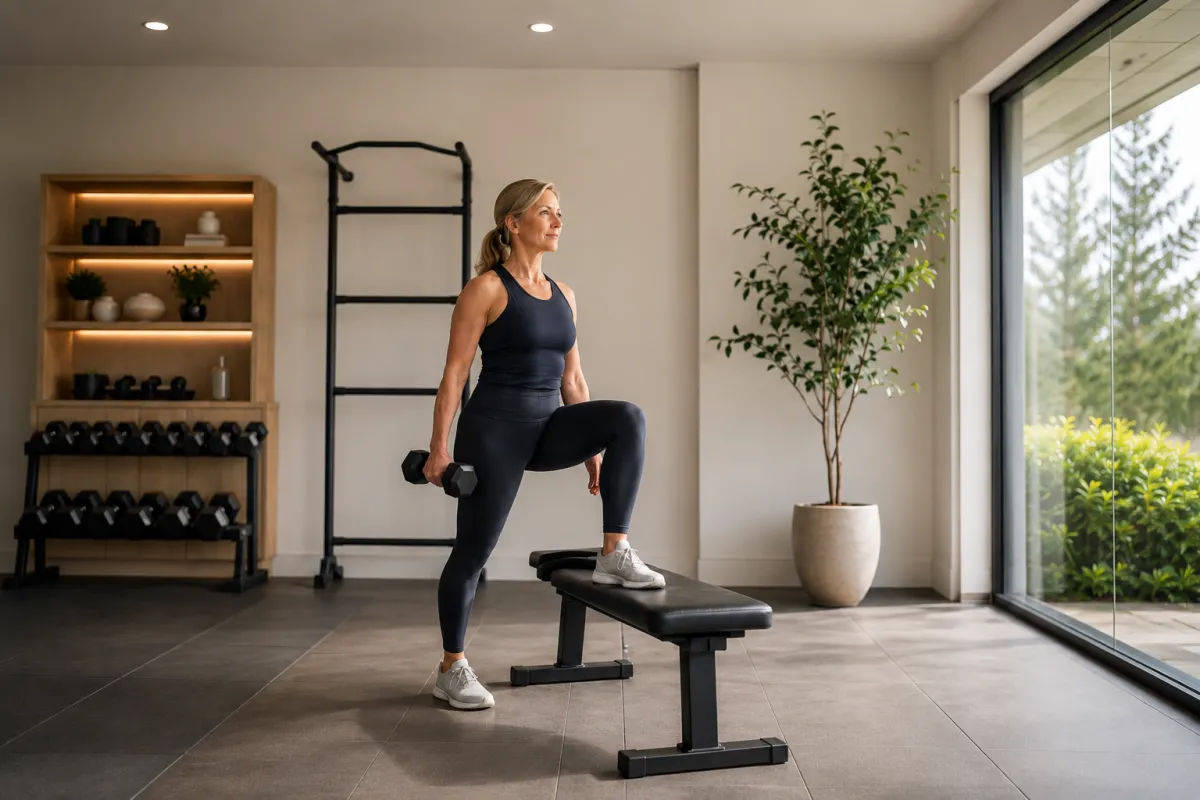
Supported squats, gentle step ups, heel raises, and resistance band exercises can help strengthen the muscles used for walking, balance, and stairs.
Keep a secure support nearby when needed.
Carry Something Safely
Carry a manageable weight while maintaining an upright posture.
This may be a light dumbbell, a shopping bag, or another object that is easy to hold.
Include Pushing and Pulling
Gentle upper body exercises can support posture and make everyday activities such as opening doors, lifting bags, and moving household objects easier.
Progress Slowly
Add resistance or repetitions gradually.
The best routine is not the one that leaves you completely depleted.
It is the one you can repeat safely and consistently.
Recovery Is Part of the Programme
Exercise creates the signal for change.
Recovery gives the body time to respond.
Strength training is most effective when it is supported by:
• Balanced meals
• Adequate protein
• Consistent sleep
• Hydration
• Rest between demanding sessions
• Nervous system regulation
• Appropriate movement technique
• Professional guidance when needed
If you are under eating, sleeping poorly, and pushing through exhaustion, another punishing workout may not create the result you want.
The body needs stimulation and restoration.
Both matter.
Gentle chiropractic care may support posture, joint comfort, mobility, and musculoskeletal function when appropriate. It does not replace strength training, but it may help address physical barriers that make movement less comfortable.
LifeWave patches and other light activated wellness tools may also form part of an individual recovery routine. They should not replace nutrition, exercise, sleep, or appropriate medical care.
The foundation remains simple.
Move your body.
Challenge your muscles.
Support your recovery.
Listen to the feedback your body provides.
Train for the Life You Want
Longevity is not only about adding years.
It is about protecting the strength, mobility, energy, and confidence needed to enjoy those years.
Dr. Andrea’s work as a chiropractor, metabolic health coach, speaker, and author reflects this wider view of healthy ageing. You can explore more about Dr. Andrea Holmes and her wellness philosophy.
You do not need to train like an athlete.
You need to train for your life.
Train for the stairs.
Train for the suitcase.
Train for the garden.
Train for the long walk.
Train for the day someone you love runs towards you and expects you to catch them.
Your body is not asking you to become twenty again.
It is asking you to remain capable.
Strength can be built.
Balance can be practised.
Metabolism can be supported.
And a more responsive body can begin with one thoughtful movement at a time.
To explore metabolic wellness, nervous system health, movement, and healthy ageing with Dr. Andrea Holmes, visit Expect Wellness or connect directly with Dr. Andrea.