
Strong Bones Need More Than Calcium | Expect Wellness
Why movement, muscle, balance, and brain body communication matter more with age
Most of us do not think about our bones until a scan raises a concern or a fall suddenly makes bone health feel very real.
Bones are quiet that way. They keep supporting us while we walk, lift, climb stairs, carry groceries, and move through everyday life.
That is why bone health deserves attention long before a fracture or diagnosis forces the conversation.
Calcium matters. Vitamin D matters. But strong bones are not built by one nutrient alone. Bone health is influenced by movement, muscle, hormones, balance, nutrition, and the way your body responds to physical load.
Your skeleton is part of a much bigger system.
Your Bones Are Living Tissue
Bones may feel solid, but they are not static structures. Bone tissue is constantly being broken down and rebuilt.
That remodeling process helps repair damage and maintain the strength of the skeleton. As we age, and especially for women after menopause, bone breakdown can begin to outpace bone building.
That is one reason bone density deserves more attention in midlife.
The answer is not fear. The answer is giving the body the right signals.
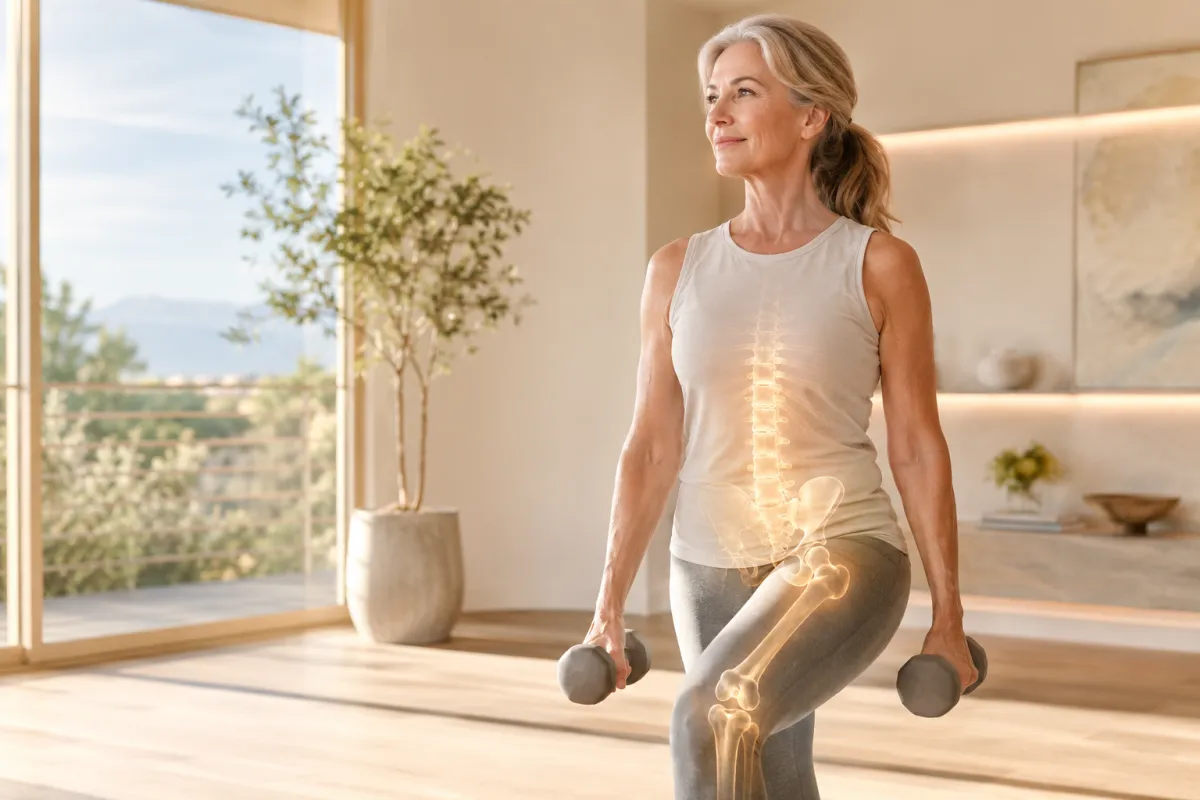
Your bones respond to mechanical load. When muscles pull on bone during movement and resistance exercise, the skeleton receives a reason to maintain strength.
Walking, strength work, stair climbing, and other weight bearing activities can all matter.
The body adapts to what we repeatedly ask it to do.
Muscle and Bone Belong in the Same Conversation
We recently talked about why muscle matters after 40. Bone health is one of the reasons.
Muscles help support joints, protect posture, stabilize the body, and reduce the chance of falling.
A stronger body is not just a body that can lift more. It is a body that can react.
If you miss a step, your brain must recognize what happened. Your muscles then need enough strength and coordination to respond quickly.
That is where muscle, balance, and bone health meet.
Protecting the skeleton is not only about bone density. It is also about reducing the situations that can lead to fractures.
Dr. Joan McGowan, an NIH expert on osteoporosis, put it simply:
“That’s why exercise that builds balance and confidence is very good at preventing fractures.”
Healthy aging is not only about what shows up on a scan. It is about whether you can move through life with confidence.
Your Brain Is Part of Bone Health Too
This is the part people often overlook.
Your brain controls movement.
Every time you step onto a curb, lift a bag, turn quickly, or recover from a stumble, your nervous system is processing information and directing the response.
Your eyes, inner ears, feet, joints, muscles, and brain are constantly exchanging information. That communication helps determine how steady you feel and how effectively you respond when the environment changes.
At Expect Wellness, this brain body relationship is central to how I think about aging.
Through gentle chiropractic care, movement assessment, and tools such as ProBalance360, the goal is not to claim that an adjustment builds bone. It does not.
The goal is to support movement, posture, coordination, and nervous system function so people can remain active and confident enough to keep using their bodies.
That same connection is explored further in Balance: The Longevity Metric Most People Never Measure.
Why Calcium Alone Is Not Enough
Calcium is one of the major building blocks in bone, and vitamin D helps the body absorb calcium.
Both are important.
But more calcium does not automatically solve every bone health problem.
The body also needs movement, muscle, enough nutrition, balance, and coordination. Depending on the person, medical evaluation and hormone related care may also be part of the picture.
Build the Foundation
A complete bone health routine may include:
• Calcium rich foods as part of a balanced diet
• Adequate vitamin D based on individual needs
• Regular weight bearing movement
• Resistance or strength training
• Balance and coordination work
• Enough protein to support muscle
• Avoiding smoking
• Moderating alcohol
• Reviewing medications and health conditions that may affect bone
• Appropriate bone density screening when recommended
The goal is not to chase one nutrient. It is to create an environment that supports the entire system.
What Changes After Menopause
For women, menopause deserves special attention because estrogen plays an important role in bone remodeling.
As estrogen levels fall, bone loss can accelerate.
That does not mean every woman will develop osteoporosis. It does mean that midlife is a smart time to stop treating bone health as something to think about later.
Ask questions. Know your family history. Talk to your healthcare provider about your risk factors and whether bone density testing is appropriate.
Pay attention to strength, posture, and balance.
Healthy aging works best when we act before a problem becomes a crisis.
Train for the Life You Want to Keep Living
When I talk about longevity, I am not interested only in adding years. I am interested in protecting the ability to use those years.
Can you travel?
Can you walk confidently?
Can you carry your own bags?
Can you get down onto the floor and stand back up?
Can you keep doing the things that make you feel like yourself?
That is why bone health, muscle, balance, and brain body communication belong together.
The skeleton gives you structure.
Muscle gives you force.
The nervous system gives you coordination.
Balance gives you confidence.
Together, they help preserve independence.
My work as an author and wellness chiropractor has always centered on this bigger view of healthy aging. You can explore more of my longevity philosophy and books through Expect Wellness.
Strong bones are not built through one supplement or one perfect habit.
They are supported through the way you live, move, nourish yourself, and respond to change.
Start before you feel fragile.
Build strength while you still feel strong.
Practice balance while you still feel steady.
Support the body you want to live in for decades to come.